Breeding Records: Templates vs. Software (What Actually Scales)
Published by Loopy on January 8th, 2026

Most breeders don’t start by asking whether they should keep records.
They ask something more practical:
“Do I stick with templates, or is it time to move into software?”
By this point, you already understand why records matter. You’ve seen how missing dates, misplaced health notes, or half-complete pedigree details can cause real problems. The question now is about what actually holds up as your breeding program grows.
This article walks through that decision clearly—without hype, without pressure—by looking at how templates and software behave in real breeding conditions.
If you’re earlier in the journey and still deciding why to go digital at all, the broader context is covered in the pillar article:
Digital Record Keeping for Breeders
The Appeal of Templates (And Why Breeders Start There)
Templates—whether spreadsheets, PDFs, or printed forms—exist for a reason. They’re familiar, flexible, and feel safe.
For small or early-stage programs, templates often work because:
- The number of animals is limited
- Records are simple and infrequently updated
- One person manages everything
- Memory fills in the gaps when records fall short
A litter log in a spreadsheet. A health checklist in a folder. A pedigree saved as a PDF.
At this stage, the system doesn’t feel broken.
The problem is that templates don’t fail loudly. They fail quietly—by becoming harder to maintain long before breeders realize it.
Where Templates Begin to Strain
As breeding programs mature, the pressure doesn’t come from volume alone. It comes from connections.
Templates struggle when:
- One animal appears across multiple documents
- Health records need to follow offspring
- Breeding history spans multiple years
- You want to see patterns, not just entries
A spreadsheet can store data, but it can’t easily:
- Warn you about missed health checks
- Prevent duplicate or inconsistent entries
- Connect lineage, breeding outcomes, and health data automatically
Most breeders compensate by adding more tabs, more files, more color-coding, and more mental tracking.
The system still “works”—but only because you’re doing the work it can’t.
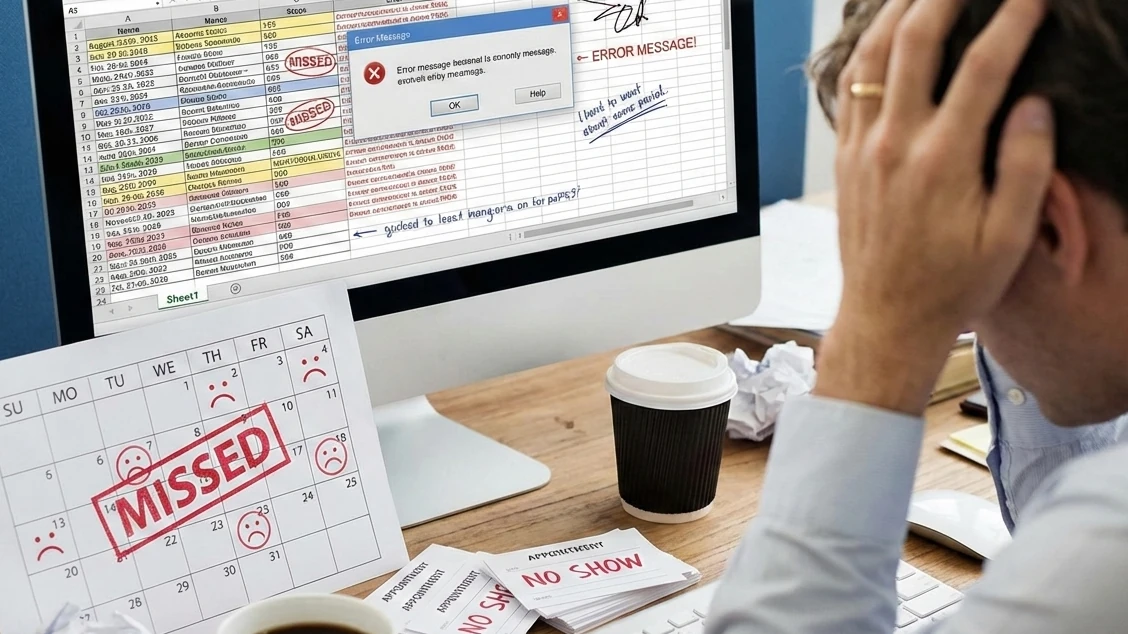
The Hidden Cost: Mental Load
One of the biggest differences between templates and software isn’t technical. It’s cognitive.
Templates require you to remember:
- Where the latest version lives
- Which file connects to which animal
- What still needs updating
- What might have been missed
Over time, record keeping becomes less about documentation and more about maintenance.
This is usually the point breeders start saying:
“I have the records… I just don’t trust that they’re complete.”
What Software Changes (And What It Doesn’t)
Good breeding software doesn’t magically make a program better.
What it does is reduce friction.
Instead of asking you to manage structure, software provides it:
- Animals live in one place
- Health data stays attached to the animal
- Breeding history builds automatically
- Information doesn’t need to be re-entered multiple times
That doesn’t mean software is perfect or necessary for everyone. It means it scales differently.
Where templates scale by adding more effort,
software scales by absorbing complexity.
When Templates Still Make Sense
Templates can still be the right choice if:
- Your program is intentionally small
- Records are rarely revisited
- There’s no need to analyze past outcomes
- You’re comfortable managing consistency manually
Some breeders use templates successfully for years—especially in niche or low-volume programs like small cat, reptile, or hobby livestock breeding.
The key question isn’t “Can I make this work?”
It’s “How much work am I willing to keep doing to make it work?”
When Software Becomes the More Stable Option
Software usually becomes the better fit when:
- You’re tracking multiple litters per year
- Health, genetics, and breeding outcomes overlap
- You want confidence, not just documentation
- Records need to survive growth, time, or delegation
At this stage, the value isn’t in features—it’s in reliability.
Knowing that what you recorded last year still connects cleanly to what you’re doing today.
Some breeders explore tools like BreederLoop at this point—not as a replacement for good practices, but as a way to reduce administrative load and keep records coherent as programs expand.
(If you’re curious, you can explore how it’s structured here).
Templates vs. Software Isn’t a Moral Choice
This isn’t about being “modern” or “old school.”
It’s about choosing a system that matches the current and future shape of your program.
Templates reward simplicity and discipline.
Software rewards growth and complexity.
Neither is wrong—but only one will scale without asking you to carry everything in your head.

If you’re evaluating other pieces of your record-keeping system—like health tracking or litter management—those topics are explored in related cluster articles that build on the same foundation as this one.