Why Health Records Matter More Than Ever in Responsible Breeding
Published by Loopy on January 20th, 2026
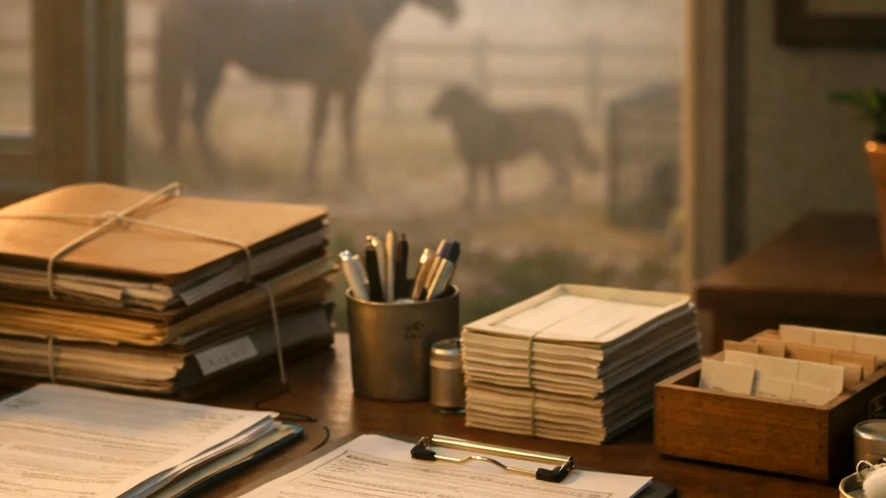
Most breeders don’t start out thinking of health records as a defining feature of their program. In the early days, notes are often simple—vaccination dates scribbled in a notebook, a reminder in a phone calendar, maybe a folder with vet receipts tucked inside. When the program is small, memory fills in the gaps.
Over time, though, something changes.
As animals age, lines develop histories. Patterns begin to emerge—some subtle, some impossible to ignore. A reaction that showed up once suddenly appears again generations later. A litter that thrived contrasts sharply with another that struggled, even though the pairings seemed similar. This is often the moment breeders realize that health records are no longer just reference material. They’ve become part of the decision-making fabric of the program itself.
When memory stops being enough
Many experienced breeders can recall a specific moment when relying on memory stopped working. It might happen when managing multiple animals at different life stages, or when outside expectations increase—buyers asking detailed questions, veterinarians requesting complete histories, or breed clubs tightening documentation standards.
At that point, health records shift from being “nice to have” to quietly essential.
Tracking vaccinations, medications, and veterinary visits is only the visible layer. Underneath that sits a deeper function: understanding how health events connect across time. This broader perspective is what responsible breeding increasingly demands. It’s also why many breeders begin looking more closely at how breeder health records fit into a larger system of organization rather than existing as isolated notes (for a deeper look at structuring these records, see https://example.com/blog/breeder-health-records).
.webp?alt=media&token=9bf79a07-1d40-4f39-96a9-3d2b32f955ed)
Health records as ethical accountability
Responsible breeding has always involved care, observation, and intention. What has changed is how clearly those qualities must now be demonstrated.
Buyers today often expect transparency—not just assurances, but documentation. Breed organizations and registries increasingly emphasize traceable health histories. In some regions, compliance requirements make proper records non-negotiable. Health records become proof, not just for others, but for the breeder themselves, that decisions are being made with care.
This is especially true when it comes to genetic considerations. Recording test results, observations, and outcomes over time allows breeders to recognize risks earlier and avoid repeating mistakes. Understanding how these records support informed genetic decisions is part of a wider conversation around long-term line health (explored further here: https://example.com/blog/genetic-testing-records-breeding).
The quiet role of records in preventing burnout
There’s another shift that often goes unnoticed. As breeding programs mature, the mental load grows. Keeping track of who received what, when follow-ups are due, or which animals require special monitoring can become exhausting.
Good health records reduce that cognitive strain. They externalize memory, allowing breeders to focus on animals rather than constantly reconstructing timelines. This doesn’t require complexity—but it does require consistency.
This is often where breeders begin rethinking how they track information, not because their current method failed, but because it no longer scales comfortably. Digital tools like BreederLoop are sometimes adopted at this stage—not as a replacement for knowledge, but as a way to centralize health histories and reduce mental overhead when programs span multiple animals and seasons.
Health records across species and settings
While dogs are often the default example, these pressures aren’t species-specific. Reptile breeders managing temperature-sensitive health notes, horse breeders tracking long-term soundness, or cat breeders documenting hereditary conditions all face the same underlying challenge: health data accumulates faster than memory can manage.
Across species, the principle remains the same. Records are not static archives. They are living references that inform future care, pairing decisions, and even timing. In regulated or compliance-heavy contexts, the role of documentation becomes even more pronounced, especially when breeders must demonstrate adherence to standards over time (a topic closely tied to https://example.com/blog/breeding-compliance-records).
.webp?alt=media&token=987f457a-8096-4b88-a3a7-4932c2dea851)
Looking forward, not backward
Perhaps the most important change in how health records are viewed is this: they are no longer just about what has happened. They are about what might happen next.
Breeders who maintain clear, accessible health histories are better positioned to plan responsibly, communicate transparently, and adapt when patterns emerge.The records themselves don’t make decisions—but they make good decisions possible.
In that sense, health records have quietly moved from the margins to the center of responsible breeding. Not because of technology or trends, but because modern breeding programs demand clarity, continuity, and care that only good records can support.